

Girls Will Be Girls is a double Sundance Award winning film by Modern Films, releasing in cinemas on 20th September, 2024.
Written and directed by Shuchi Talati; the film stars Preeti Panigrahi, Mani Kusruti and Kesav Binoy Kiron. Hailed upon its showing at Sundance Festival earlier this year; the film won the Audience Award and the World Cinema Dramatic Special Award for Acting.
This story is about 16 year old teenager “Mira”; who resides in the Himalayas and goes to a strict boarding school. At that age, she is starting to discover desire and romance, however this rebellious awakening is disrupted by her overbearing mother who never had her own coming-of-age tale herself.
Talati’s previous work dealt with challenging social norms from her homeland, this is another tale about women challenging social conventions thrust upon them by patriarchal constructs.
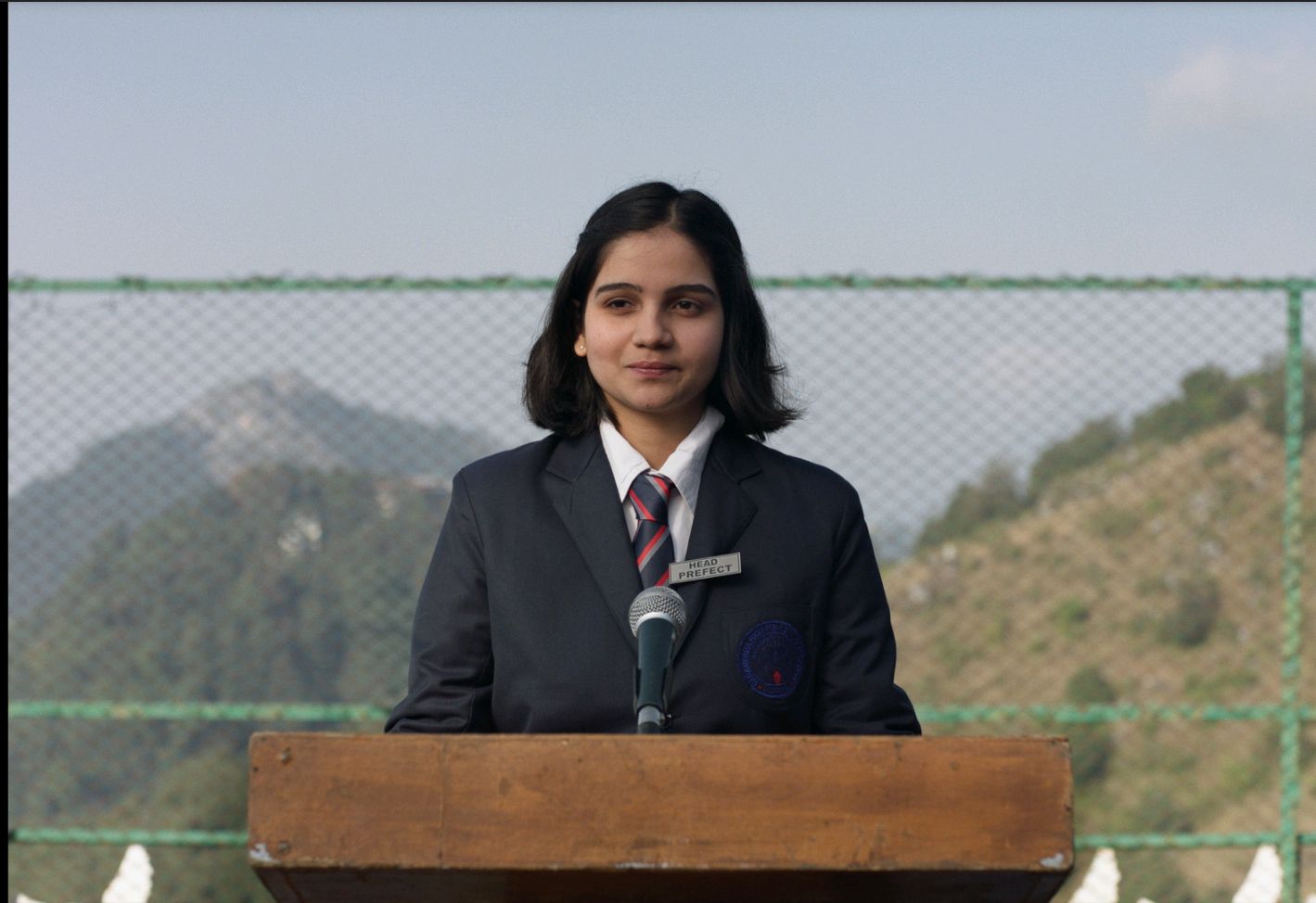
Talati cleverly shoots the film as a part homage to the works of Ozu when we see the domestic settings of Mira and her mother, juxtaposed with the cool hand-held works of Linklater; when Mira is away from her home. This clashing of styles speaks to the inner yearnings of Mira herself, the restrained and restrictive nature of home-life compared to that joie de vivre of school life and sexual awakening.
As the film progresses, Mira’s mother, Anila pursues her desires with fervour as jealousy of her daughter’s youth. The two women attempt to shun the social norms and conformities. Talati wants her characters to experience all emotions and express themselves and not as a stand-in of the community, making this a more universal offering.
The acting of the ensemble collectively is impressive across the film, the location of the school which is a building of brutalist architecture and big columns giving the impression of another daily prison for female children to overcome.
An eye-opening film of a world far away from the viewer’s own, the film revolves around a young girl who is yearning to become an adult but have some fun in learning whilst combatting the young male who is also growing up.
The inclusion of boys at the school taking pictures up girl’s skirts is a story all too familiar in these days of masculine toxicity – the clash of ideologies with desires is a vertiable minefield of problems. While male sexuality is allowed to express itself sometimes with too much aggression towards women, girls are instructed to be more submissive and protect their virture.
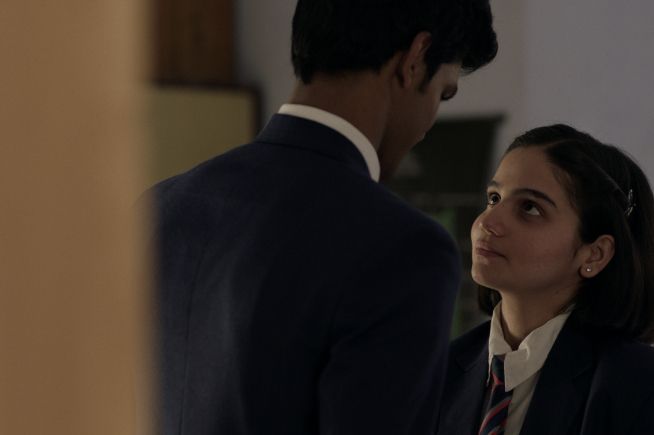
Talati shows men having lingering looks at the 16 year old Mira throughout the film, is it a threatening look or a look of desire, that comes from the viewer’s context and situation and helps the viewer take different outcomes from the film.
Set in the 1990s before the advent of the world wide web when the wall got smaller and the threat of predatory sexual conduct became more apparent; this is a nostalgic film of a more innocent age when it was easier perhaps.
With the forthcoming All We Imagine As Light (which won the Grand Prix at Cannes this year for Payal Kapadia), this smart film adds to the burgeoning renaissance that Indian and sub-continental cinema is enjoying currently.
Check out more reviews written by Jamie Garwood. As well as a recent review titled “Paradise is Burning“





 Chatter Box Film